
You have submitted a social housing application, it has gone to the allocation commission, and since then, there has been radio silence. This waiting period without clear benchmarks leads many applicants to wonder when to follow up, and especially how to do so without jeopardizing their application. The problem largely stems from the absence of a national legal timeframe after the housing allocation commission. Understanding this legal void and the actual practices of landlords allows for timely action.
Why no legal timeframe applies after the HLM allocation commission
Many candidates are looking for a legal text that would set a specific number of days to receive a response. This text does not exist. No national legal timeframe is imposed after the commission meeting.
The timing depends on the internal regulations of each social landlord and, in some cases, the local allocation regulations adopted by the intermunicipality. An HLM organization in Île-de-France and a landlord in a rural area do not operate at the same pace.
In practice, however, ranges have become standardized. The verification of the file before the commission meeting often takes between a few days and about ten days. The commission itself generally meets once or twice a month. After the decision, the notification to the candidate often arrives within two to ten days, depending on whether the landlord uses postal mail or email.
When looking for concrete feedback on the housing allocation commission forum and response times, it is noted that testimonies confirm this disparity: some receive a call the next day, while others wait several weeks without news.
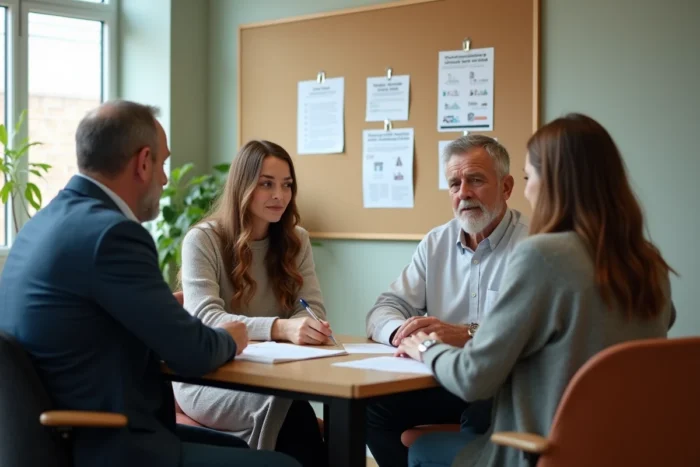
Following up with the social landlord: the right time and the right channel
Following up too early is annoying. Following up too late gives the impression that you are no longer interested in the housing. So, what is the right timing?
Wait at least ten working days after the commission
If the commission has taken place and you have not received any letter or call after about ten working days, a follow-up is legitimate. Before this threshold, the landlord may still be notifying the results by postal mail.
Prefer a phone call to the allocations service. A call allows you to get an immediate response regarding the status of your file, whereas a letter adds several more days of waiting.
What to say (and not to say)
Keep a factual tone. Mention your unique registration number, the date of the commission meeting, and the housing in question. Simply ask if a decision has been made and when you will receive the notification.
- Provide your unique number (NUR/NUD) at the beginning of the exchange so that the interlocutor can quickly find your file.
- Do not exert emotional pressure or threaten to appeal in the first contact: this puts the interlocutor on the defensive without speeding up the process.
- Note the name of the person contacted and the date of the call to keep a record for any future follow-ups.
If you are ranked 1 (main candidate), the response directly concerns the allocation. If you are ranked 2 or 3, you will only be contacted if the higher-ranked candidate refuses the housing or does not respond within the timeframe set by the landlord.
Favorable opinion in the commission: what happens next from the landlord’s side
A favorable opinion does not mean that the keys will arrive the following week. Several steps separate the commission’s decision from the signing of the lease.
The landlord checks the documents in the file one last time. If a document is missing or expired (proof of income, accommodation certificate), this verification prolongs the process. Anticipate by updating your documents even before the commission meeting.
Then, the selected candidate is invited to visit the housing. This visit often conditions the next steps: if you do not show up or confirm your interest within the indicated timeframe, the landlord moves on to the next candidate.
The lease signing occurs after the visit is accepted. The overall timeframe between the favorable opinion and moving in can vary from a few weeks to more than a month, especially if renovation work is ongoing in the housing.
Application refused or unanswered: concrete recourse for the applicant
You followed up, and the response is a refusal. Or you still have not received any response despite several follow-ups. Two distinct situations call for different reactions.
In case of a reasoned refusal
The commission must notify the reason for the refusal. The most common reasons relate to exceeding income ceilings, a mismatch between the size of the housing and the household composition, or an incomplete file.
Check if the reason given actually corresponds to your situation. A calculation error on income or a poorly transmitted document can be corrected, and your file can be resubmitted at the next commission.
In case of abnormally long waiting without news
If your social housing application exceeds the abnormally long timeframe set by the prefect of your department, you can refer the matter to the mediation commission under the right to housing (DALO). This recourse is a real lever, but it only concerns applicants whose application has been pending beyond the departmental threshold.
- Check the abnormally long timeframe applicable in your department with the prefecture or an ADIL (Departmental Agency for Housing Information).
- Prepare a referral file with evidence of your initial application, your follow-ups, and the absence of a proposal.
- The mediation commission has a few months to issue its opinion, which may lead to a relocation obligation by the prefect.

The current pressure on the social housing stock makes each follow-up more strategic. The demand for HLM housing continues to rise while the number of allocations tends to decrease. In this context, a complete, up-to-date file and a well-timed follow-up remain the best levers available to a candidate. Keep a written record of every exchange with the landlord: in case of recourse, these documents constitute your main evidence.