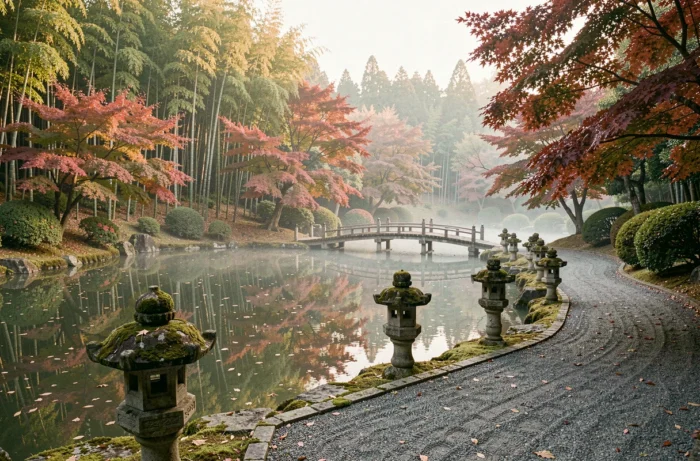
The Oriental Park of Maulévrier, classified as a Remarkable Garden, is recognized as the largest Japanese garden in Europe. Located in Maine-et-Loire, near Cholet, it attracts visitors seeking a change of scenery at any time of the year. However, the choice of season radically alters what one sees, hears, and feels there.
Maples, reflections, and low light: what autumn really changes
Autumn is often cited as the most spectacular time to visit the Maulévrier park, and the facts support this. The Japanese maples, planted in abundance along the water feature, go through shades of red, orange, and copper that transform every perspective.
What distinguishes this season is not just the color palette. The autumn light, lower and more golden, enhances the reflections on the water, a central element in the garden’s composition. Photographers find conditions that full summer cannot offer: soft contrasts, the absence of dense foliage obscuring structures, and a misty atmosphere on certain mornings.
By choosing the right time in autumn, one also gains access to the park’s cultural programming. In November 2026, the Momiji event offered picnics and demonstrations of traditional Japanese dance over several days. The Musicales of the park, organized in October 2026, featured six short concerts spread across three stages, blending traditional and contemporary repertoires.
Choosing the ideal season for the Maulévrier park depends on what one is looking for, but autumn remains the time when the garden most intensely expresses its Japanese vocation.
Spring at the Maulévrier park: blooms and reading the garden
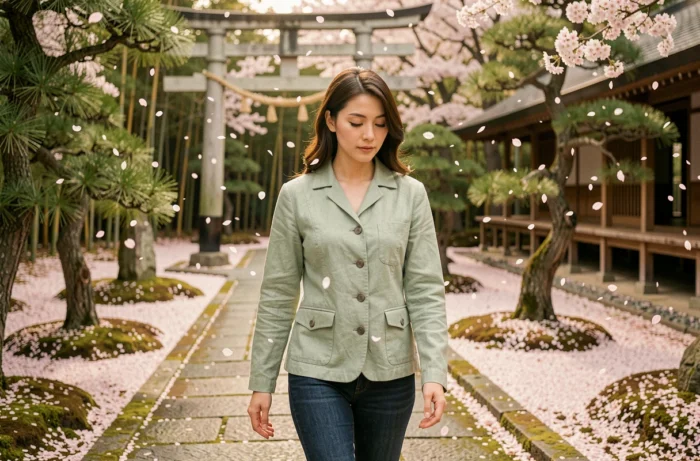
Spring operates on a different register. The blooms, especially those of cherry trees and azaleas, bring touches of pink and white that contrast with the tender green of new leaves. Spring reveals the plant structure of the garden before the summer foliage closes off the perspectives.
This season also allows for a better understanding of the symbolism of the place. The Oriental Park of Maulévrier was designed according to the principles of the strolling Japanese garden: each bridge, each island, each pruned tree occupies a precise place in a journey that tells the cycle of life. In spring, when the vegetation has not yet covered everything, these compositional lines remain readable.
For visitors interested in botany or photographing blooms, the suitable window is between mid-April and the end of May, but it varies depending on the climatic conditions of the year. Checking the bloom status with the park before planning a visit remains a useful precaution.
Visiting the Japanese garden in summer: a possible but different experience
Summer is not the season most highlighted by guides, and there is a technical reason for this. The large blooms have passed, and the dense foliage closes off views of the water feature. The garden loses some of its visual depth.
The visit remains pleasant for those seeking shade and coolness. The plant cover and proximity to water create a microclimate that is noticeably cooler than in the center of Cholet. Night walks, offered in season, add a dimension that other times do not provide:
- An illuminated path that highlights the volumes and textures of the plants, invisible in broad daylight
- A different sound atmosphere, with the croaking of frogs and insects around the water feature
- A generally lower visitor count than during the day, which alters the atmosphere of contemplation
Night walks are a strong argument for a summer visit, provided to check the opening dates, which change every year.
Opening calendar and weather conditions: variables to anticipate
The Maulévrier park is not open all year round according to the same hours. The opening period and time slots vary from season to season, and some winter weeks may be subject to closures. Consulting the official calendar before each visit is a step not to be skipped, especially for a late visit in autumn or early spring.
The weather of the day also plays a direct role in the quality of the experience. A recurring piece of advice from visitor feedback is to choose a windless day. The water feature is one of the central elements of the garden, and reflections only form properly on a calm surface. A windy day deprives the visitor of this contemplative dimension.
- Autumn (October-November): colors of the maples, cultural events, low light ideal for photography
- Spring (April-May): blooms, readability of the garden’s structure, mild temperatures
- Summer (June-August): dense greenery, relative coolness, night walks
- Winter: limited opening, stripped-down atmosphere that appeals to fans of dry gardens
The available data mainly documents the programming for 2026. For subsequent editions of the Musicales or Momiji, dates and formats may evolve. Relying on the park’s website or the Cholet tourism office remains the most reliable way to plan a visit.
The Oriental Park of Maulévrier offers a distinct experience in each season. Autumn concentrates the most striking visual and cultural assets. Spring enchants with its blooms and clarity of perspectives. Summer justifies itself through night walks. None of these periods is bad, but none provides access to the same garden.