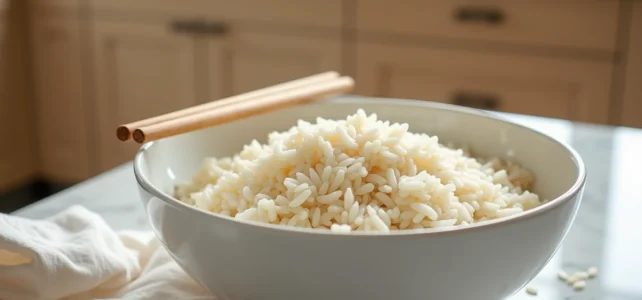
The cantonese rice syndrome refers to a food poisoning caused by Bacillus cereus, a spore-forming bacterium found in poorly stored cooked starches. Rice is the most common vector, but pasta, semolina, and mashed potatoes expose to the same toxic mechanism.
Bacillus cereus emetic toxin: an underestimated thermostable risk
Bacillus cereus produces two types of toxins with distinct clinical profiles. The diarrheal toxin, thermolabile, forms in the small intestine after ingestion of vegetative cells. It causes diarrhea within eight to sixteen hours and is rarely severe.
The emetic toxin (cereulide) poses a problem of another nature. Cereulide resists cooking and reheating, including at temperatures higher than those of prolonged boiling. Once synthesized in food, no domestic thermal treatment can inactivate it. Vomiting occurs quickly, generally within the first hours after ingestion.
We observe that the confusion between these two mechanisms fuels a false sense of security. Reheating suspicious rice does not neutralize the cereulide already accumulated. Only upstream prevention, focused on controlling cooling, prevents its formation.
To better understand the distinction between these two toxic pathways and their real impact on health, one can read the article on L’Art du Goût which details the biological mechanisms at play.
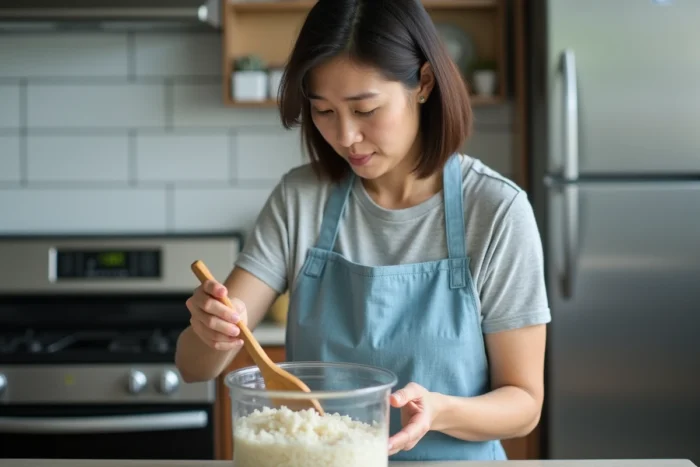
Cooling phase of cooked rice: the critical window to control
Recent prevention guides increasingly emphasize managing cooling rather than just cooking. It is during the return to room temperature that Bacillus cereus spores germinate and the bacterium actively multiplies.
Thermal danger zone and bacterial multiplication
Between the end of cooking and cooling, every minute counts. The temperature range between lukewarm and moderate heat constitutes the optimal environment for spore germination. The longer the rice stagnates in this zone, the higher the concentration of emetic toxin increases.
The professional recommendation is to bring cooked rice below the positive cold threshold within two hours after cooking. In collective catering, we recommend the use of rapid cooling cells. In domestic kitchens, dividing the rice into thin portions in wide containers speeds up thermal transfer.
Effect of heat waves on actual risk
Health authorities emphasize that heatwave episodes significantly reduce the margin for error. Cooked rice left on a countertop for a few hours in summer presents a significantly higher risk than the same action in winter, with the same exposure duration. Room temperature acts as a direct accelerator of sporulation.
Storage and reheating of rice: food prevention protocol
Prevention relies on a chain of precise actions, from the end of cooking to the consumption of leftovers. Here are the steps to follow:
- Never leave cooked rice at room temperature for more than two hours (reduce this time during periods of high heat).
- Store leftovers in the refrigerator in a shallow airtight container to promote even cooling.
- Consume leftovers within twenty-four hours after cooking, not beyond.
- When reheating, bring the rice to a proper temperature throughout its thickness, knowing that this does not destroy the cereulide already present but limits the proliferation of residual vegetative cells.
A point often overlooked: reheating never compensates for poorly managed cooling. If the rice has been left out of the cold for too long, throwing it away remains the only safe option.
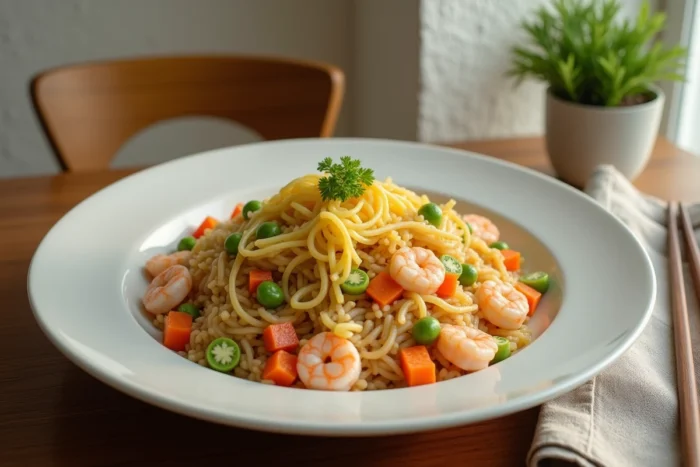
Bacillus cereus in collective catering: a logistical flow challenge
In collective catering, the risk associated with Bacillus cereus is less about hygienic ignorance than about an issue of organizing production flows. Large quantities of cooked rice generate considerable thermal inertia. A gastronorm container filled with rice takes much longer to cool than an individual portion.
Regulatory obligations require temperature recording at every stage (cooking, cooling, storage, reheating). We observe that failures most often occur during staggered services or advance preparations, when cooked rice waits between two steps without rigorous thermal monitoring.
Operators are required to document their HACCP procedures, but temperature descent control remains the most frequently identified weak link during inspections. Investment in rapid cooling cells and training staff on the management of cooked starches are the two most effective levers.
Real severity of cantonese rice syndrome: between alarmism and underestimation
Fatal cases related to cereulide exist but remain rare. The vast majority of Bacillus cereus poisonings manifest as moderate digestive disturbances that resolve within a few hours. Severe forms typically occur after ingestion of large amounts of emetic toxin, accumulated in food stored for several days at inappropriate temperatures.
The real danger does not lie in cantonese rice consumed at a restaurant, usually prepared and served within a short timeframe. It concentrates on poorly managed domestic leftovers: the rice dish prepared on Sunday, forgotten on the table, then reheated the next day without question.
Preventing cantonese rice syndrome boils down to a simple rule to remember: cook, cool quickly, store cold, consume quickly. Any break in this sequence opens the door to cereulide production, which neither taste, smell, nor reheating can detect.