
When you receive a message from the Caf indicating that your email will be forwarded to an expert, the first reaction is often confusion. This email transfer to a Caf expert simply means that the request exceeds standard processing and requires the intervention of a specialized manager. Understanding this mechanism can speed up the processing of your file instead of multiplying unnecessary follow-ups.
Why the Caf forwards certain emails to an expert
You send a message via the “Contact my Caf” section in your Mon Compte space, and a few days later, a notification indicates that the email has been redirected. This sorting is not random.
The Caf’s integrated messaging system operates with a routing system to the competent service. When a first agent notices that the request involves a complex recalculation of benefits, a dispute over overpayment, or an atypical family situation, they cannot handle it alone. The message is then directed to a technician or advisory manager with the necessary authorization.
Specifically, the reasons that trigger this transfer most often concern resource errors that cannot be corrected independently in the online space, disputes over RSA or the activity bonus, or requests for revision after a change in situation that has not been properly taken into account. If you want to transfer your email to a Caf expert smoothly, the key lies in the drafting of the first message.

Write a Caf email that will be processed quickly by the expert
The written record left in the “Contact my Caf” messaging system forms the basis on which the expert processes the file. A vague or incomplete message extends the timelines, sometimes by several weeks.
Structure the message for the right service
Before writing, select the section corresponding to your benefit (family allowances, housing assistance, RSA, activity bonus). This choice already directs the email to the appropriate level of expertise. Choosing the wrong section can lead to a second internal transfer and double the response time.
The body of the message benefits from following a simple logic:
- Remind your beneficiary number in the first line, even if you are writing from your connected space
- Describe the situation in one or two factual sentences (date of change, nature of the problem, disputed amount if it is a dispute)
- Specify what you expect: recalculation, cancellation of an undue payment, consideration of a document already submitted
- Attach the requested supporting documents in the required format (PDF or readable photo) rather than promising a later submission
A complete message from the first submission reduces the number of back-and-forth exchanges with the expert. Each additional exchange pushes back the processing date.
Formulation errors that slow down the file
Sending multiple emails on the same subject a few days apart creates duplicates in the system. The expert then has to merge the requests, which takes time.
Another common pitfall: writing an emotional message without usable information. A sentence like “I still haven’t received anything, this is unacceptable” gives the manager no leverage. Focusing on facts and dates allows the expert to immediately identify the blockage in the file.
Response times from a Caf expert and useful follow-up
Response times vary on this point depending on the departmental Cafs and the time of year. Peaks in requests (back-to-school, quarterly resource declarations) significantly extend response times.
When the email is forwarded to an expert, processing generally takes longer than a standard response. The file goes through a dedicated queue where cases are processed in order of priority and complexity.
When and how to follow up with the Caf
Following up too early does not speed anything up. If you have not received a response after a reasonable time, the best option remains to go back through the “Contact my Caf” section referencing the initial message (date of sending, exact subject).
You can also check the “My letters” section in the online space. If a letter from the Caf appears there in the meantime, it means the file has progressed, even without a direct response to the email.
- Check “My letters” and “My payments” before any follow-up
- Use the same channel (online messaging) to keep the history centralized
- Do not double up with a phone call on the same subject, unless it’s an urgent payment issue
If the situation is truly blocked (suspension of rights, absence of payment for several months), making an appointment at the agency via the online space remains the most effective option. A physical or phone interview with an advisor can help unblock certain files that are stagnating in the email queue.
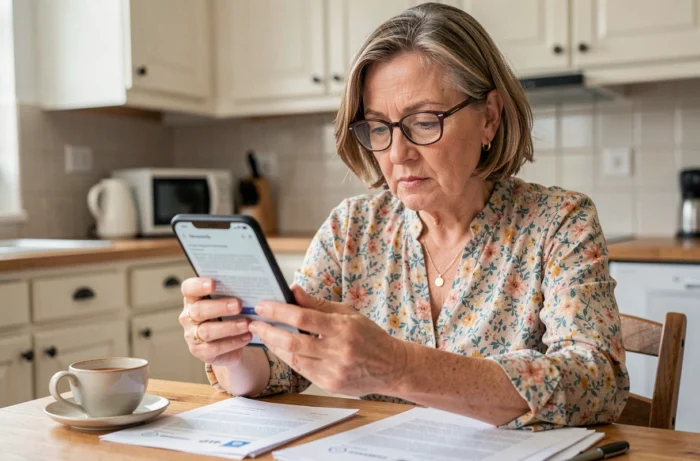
Alternatives to email for contacting a Caf expert
Email via “Contact my Caf” is not the only channel, but it is the one that leaves the best usable record. For urgent situations (housing assistance not paid before a rent deadline, RSA suspension without explanation), the phone remains a useful complement.
The Cafs regularly publish telephone traffic guidelines on their departmental pages. Calling early in the morning or mid-afternoon increases the chances of reaching a representative without excessive waiting.
Making an appointment at the agency, now available online for most Cafs, allows you to secure a dedicated time slot with an authorized advisor. This appointment is particularly suitable for files where several documents need to be reviewed together.
The transfer of an email to a Caf expert is not a warning signal; it is a normal step for requests that fall outside standard processing. A well-structured first message with attached supporting documents remains the best way to obtain a usable response without multiplying the steps.