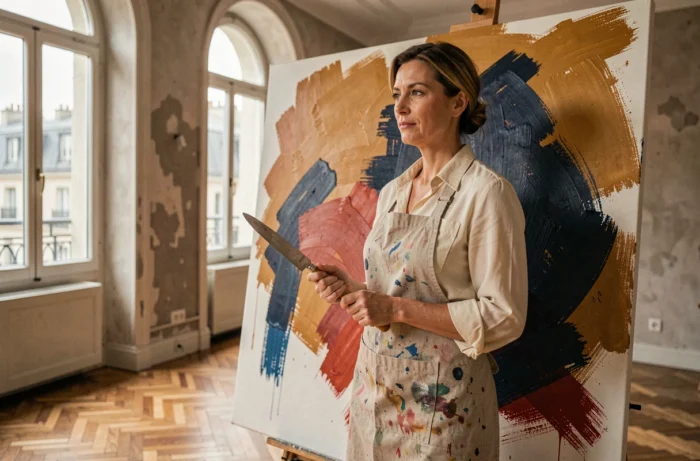
Béatrice Vonderweidt is a French painter and former model whose work spans Paris and Tel Aviv. She is also known as Béatrice Goldnadel, the name she has used since marrying lawyer and essayist Gilles-William Goldnadel. This dual identity runs through her artistic career and can sometimes make it difficult to trace her works and exhibitions in public catalogues.
Vonderweidt or Goldnadel: tracing an artist across two names
A name is rarely a trivial matter in the art world. For Béatrice Vonderweidt, it presents a real documentary challenge. Her first public appearances, associated with modelling, were under her birth name. Her paintings, however, are often signed or listed under the name Goldnadel.
The coexistence of these two identities makes it harder to find her work. Exhibition catalogues, museum databases such as those referenced by the Ministry of Culture, and gallery archives do not automatically merge the two entries. Anyone searching for her paintings under “Vonderweidt” could miss those listed under “Goldnadel”, and vice versa.
To piece together a complete career, the paintings of Béatrice Vonderweidt, the artist offer a starting point that brings together both periods. Exhibition documents remain the most reliable sources: an invitation card, gallery leaflet or press release will generally mention the name the artist was using at the time of the exhibition.
Cross-referencing both names in documentary databases is the only rigorous way to trace the full body of her work. Without this step, part of it remains invisible.
Béatrice Vonderweidt the painter: a practice spanning Paris and Tel Aviv
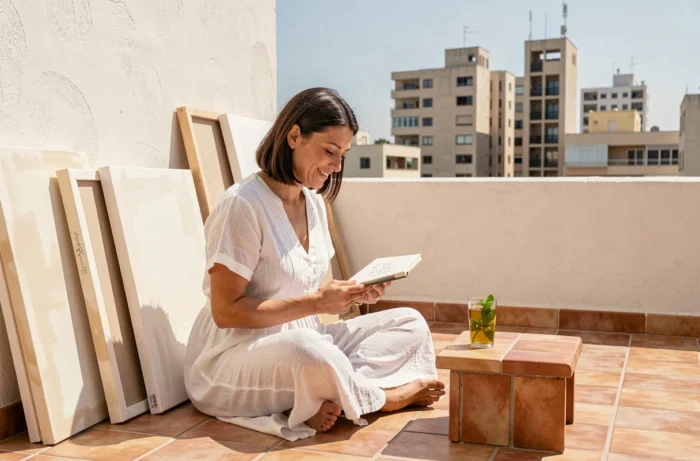
Béatrice Vonderweidt’s artistic activity is not confined to a single place. Her painting is rooted in two cities, Paris and Tel Aviv, which form the two geographical centres of her work.
An exhibition at the Institut français de Tel-Aviv was announced in 2008. This type of venue, part of the French cultural network abroad, presents artists whose work engages in dialogue between cultures. Exhibiting in this setting involves selection by the institution and efforts to engage with local audiences.
In Paris, her career is less clearly documented. No major retrospective at a French public institution appears in the available sources. Her work has circulated mainly through private galleries and occasional events, which is common for contemporary figurative artists who are not associated with a widely publicised movement.
What exhibition documents reveal
The most useful materials for establishing the chronology of an artist with a limited online presence include:
- Invitation cards and press releases, which give the exact name used, the date and venue, and sometimes an artist’s statement about the works on display.
- Exhibition booklets or handouts distributed at openings, which list the titles and dimensions of the paintings on display.
- Gallery catalogues, however modest, which reproduce selected works and provide critical commentary or a biographical note updated at the time of publication.
For Béatrice Vonderweidt, these documents are especially valuable because her online presence remains limited. Online biographies often repeat the same details without citing primary sources, creating an echo effect without adding any real information.
From modelling to painting: how this journey changes the way we read her work
The transition from modelling to painting is a documented path for several public figures. In Béatrice Vonderweidt’s case, it is more than a simple career change. It marks a shift from being an image to creating images.
Modelling involves presenting the body through an outside gaze—that of a photographer, art director or stylist. Painting reverses this dynamic: the artist chooses the frame, subject and light. Moving from the object of the gaze to the one who looks fundamentally changes one’s relationship with representation.
Available sources describe a pictorial world shaped by light and human presence, without identifying a particular formal movement. This focus on luminosity and the human figure can be seen as an extension of the visual sensibility she developed in fashion, redirected into a medium in which the artist has complete control.
Artistic activity and public discretion
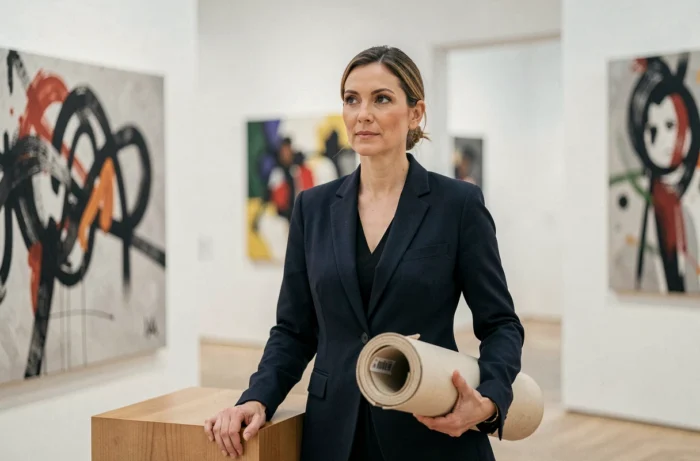
Béatrice Vonderweidt remains a discreet figure in the media landscape. Unlike Gilles-William Goldnadel, who regularly appears in public debates, she does not discuss her work in the media.
This discretion has a direct impact on the documentation of her work. Few published interviews or critical texts offer insight into her approach in her own words. Those interested must turn to material records—exhibitions, catalogues and reproductions—rather than statements of intent.
This is not unusual in the French contemporary art world. Many artists active in the private gallery circuit create and exhibit without seeking media attention. Their careers are pieced together through the works themselves and the institutional records they leave behind.
Béatrice Vonderweidt: finding the works beyond the repeated biographies
Most online pages about Béatrice Vonderweidt repeat the same basic information: modelling, marriage, painting and Tel Aviv. The wording may vary, but the substance remains the same.
To go beyond this biographical layer, there are three practical avenues to explore:
- Consult the archives of the Institut français de Tel-Aviv, which keeps records of past exhibitions and may be able to confirm their dates and contents.
- Search the Ministry of Culture’s databases under both names (Vonderweidt and Goldnadel) to identify any works that may have entered public collections.
- Contact Paris galleries that have exhibited her paintings directly; they often hold artist files and lists of works that have not been published online.
The scarcity of digital sources does not mean that no substantial body of work exists. It reflects a mode of circulation that predates or bypasses online cataloguing. In Béatrice Vonderweidt’s case, much remains to be documented, work by work and exhibition by exhibition.