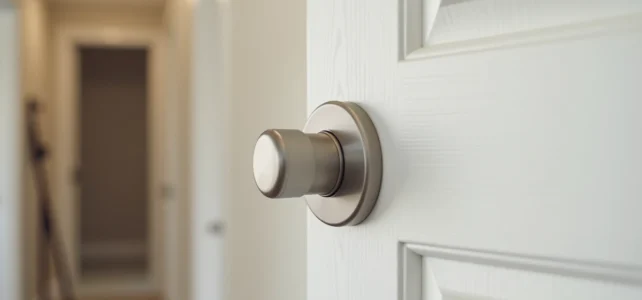
A lock is a mechanism for securing independently of the main lock. It is mounted on the door and projects a bolt into a strike plate screwed into the frame.
The difference between a thumb turn lock and a key lock lies in the operation on the inside: one is operated by a thumb rotation, while the other requires a key on both sides. This design detail affects the level of security, ease of use, and behavior in an emergency situation.
Bolt, cylinder, and strike plate: anatomy of a door lock
Before comparing the two systems, it is essential to understand the components that make them up. The bolt is the movable part, typically a rectangular deadbolt made of steel. Its travel (the length of projection into the strike plate) largely determines the resistance to pulling out.
The cylinder, also known as the barrel, is the component that receives the key or thumb turn. On a thumb turn lock, the cylinder exists only on the outside. On the inside, a rotating knob replaces the pin mechanism.
On a double-entry lock (known as “keyed on both sides”), two cylinders are mounted on either side of the door. The strike plate, finally, is the metal piece fixed in the frame that receives the bolt. Its strength is as important as that of the lock itself: a thin sheet metal strike plate reduces the overall resistance, regardless of the chosen model.
When it comes to choosing a type of key lock, these technical elements already guide the decision towards a specific use.
Thumb turn lock: fire safety and evacuation comfort
The thumb turn lock is distinguished by its interior operation without a key. A quarter turn of the knob is enough to release the bolt. This simple action has a direct consequence on fire safety.
Emergency and fire prevention services advise against leaving a key in the cylinder on the inside at night. In case of dense smoke or panic, fumbling for a key prolongs the evacuation time. A thumb turn lock eliminates this risk: the door unlocks with a reflexive gesture, even in the dark.
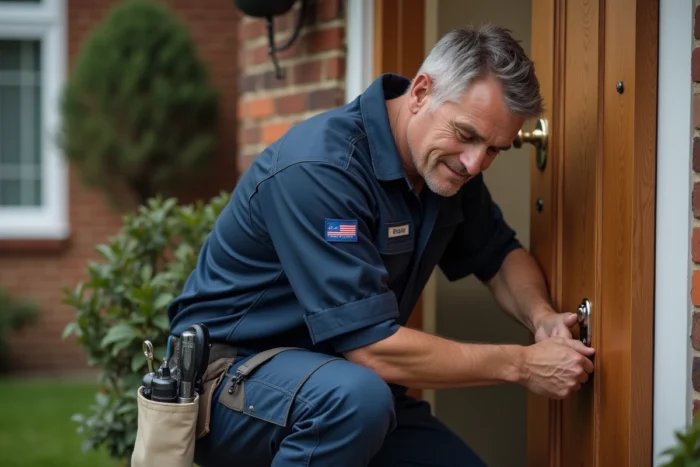
This type of lock is particularly suitable for the following configurations:
- Entrance door of a permanently occupied residence, where the priority is rapid evacuation in case of emergency
- Interior door separating a hallway from a living space (office, bedroom), when the lock mainly serves to preserve privacy
- Home with children or people with reduced mobility, for whom manipulating a key under stress is a real obstacle
The downside is evident: on the inside, no key protects against unauthorized opening. A person with access to the inside of the residence can open the lock without a tool. This point is negligible in a household but prohibitive for an unoccupied commercial space at night.
Double-entry key lock: when internal locking matters
The double-entry lock requires a key to secure and open the door from both sides. This operation meets a specific need: to prevent opening from the inside in the absence of a key.
The most common use case is a door with glazing or a peephole. A burglar who breaks the glass and reaches through from the inside cannot turn a simple knob: without the key, the bolt remains stuck. This configuration also protects service doors, technical rooms, and garages, which often remain unoccupied for long hours.
The downside of this enhanced security is a risk of entrapment. If the key is not immediately accessible on the inside, evacuation becomes slower. Locksmith professionals recommend keeping the key on a hook fixed close to the lock, out of reach from a broken window.
Technical criteria for choosing the cylinder
The level of protection of a key lock depends on the installed cylinder. A few parameters deserve attention:
- The length of the cylinder must correspond to the thickness of the door, with a minimal projection on the outside to limit picking access
- A high-security cylinder with multiple pins or discs offers better resistance than a standard five-pin model
- A patented key system prevents unauthorized duplication at a regular locksmith, which limits the risk of fraudulent copying
Button or key: comparative table by situation
The choice does not involve a hierarchy of quality but rather an adequacy between the mechanism and its installation context.
| Criterion | Thumb turn lock | Double-entry key lock |
|---|---|---|
| Emergency evacuation | Quick, no tools | Requires the key on the inside |
| Protection for glazed doors | Low (accessible knob) | High (key essential) |
| Unoccupied premises | Not recommended | Suitable |
| Occupied family residence | Recommended | Possible with accessible key |
| Ease of use | Very simple | Depends on key availability |
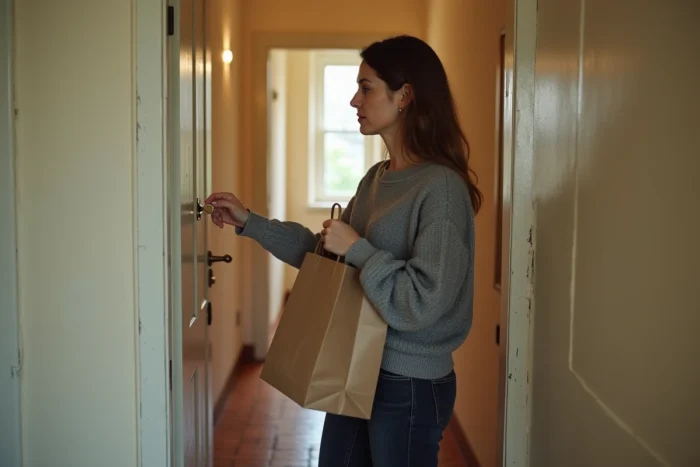
Some manufacturers offer cylinders with an interior knob combined with an exterior key cylinder, bringing together the advantages of both systems in one lock. This mixed setup is suitable for solid entrance doors (without glazing) of inhabited residences.
Smart locks and keyless locks: a third way
Code or digital command locks change the classic dilemma between knob and key. These models eliminate dependence on a physical key for regular users while often retaining a mechanical backup key entry.
This combination resolves the rapid evacuation issue (interior unlocking is done via a button or touchscreen) without sacrificing exterior security. However, professionals emphasize that in case of battery failure, the absence of a mechanical backup key can block access. The most reliable models incorporate a backup power supply or a complementary mechanical cylinder.
The choice between a thumb turn lock and a key lock comes down to a question of context, not intrinsic quality. A solid door in an occupied residence calls for an interior knob. A glazed door or an empty space justifies the double-entry key lock. In all cases, the strength of the strike plate and the level of the cylinder matter more than the method of operation.