
The scrap buyback price at a recycler depends on an indexing mechanism based on international prices, notably the Turkish Scrap Index. At Derichebourg, this price is referred to as indicative and is based on a national average, updated with a variable lag compared to specialized indices such as FerrailleMonitor or Turkish export quotes. Understanding this mechanism allows one to anticipate what they will actually receive at the counter.
Indexing Lag at Derichebourg: Why Scrap Prices React Slowly
Large recycling groups do not instantly pass on increases or decreases in global prices. Derichebourg adjusts its rates with a longer lag than many independent scrap dealers.
Specifically, when the price of heavy scrap rises on the reference indices, a well-positioned local depot can raise its purchase price within a few days. At Derichebourg, the price update takes longer, creating a temporary gap between the actual price and the price offered to the seller.
This operation is explained by the size of the network: harmonizing prices across dozens of centers requires centralized validation. A regional scrap dealer can decide on their own to adjust their offer that very morning by consulting FerrailleMonitor. The challenge for the seller is simple: during periods of rapid price increases, comparing the scrap price at Derichebourg in 2026 with that of a local competitor can reveal significant discrepancies.
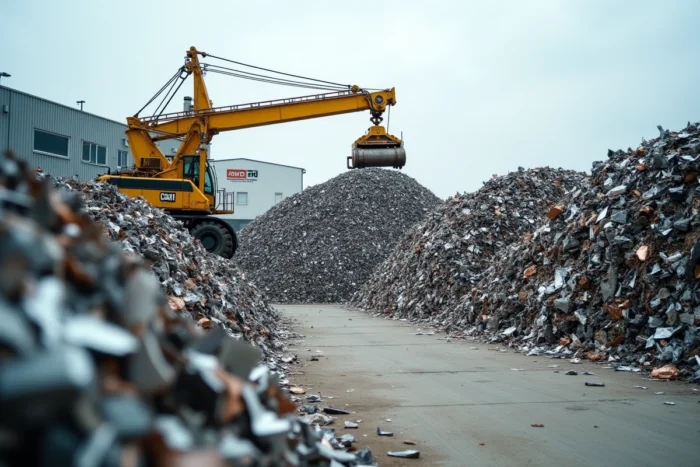
Heavy Scrap, Mixed Scrap, Cast Iron: Price Discrepancies by Category
Not all scrap lots are equal. The price depends on the category declared at the time of weighing, and Derichebourg applies a scale that distinguishes several types of ferrous metals.
Heavy scrap (thick pieces, profiles, massive sheets) fetches the best price per kilo. Mixed scrap, which is more heterogeneous and often mixed with non-metallic elements, is paid significantly less. Cast iron falls within an intermediate range.
Upstream sorting radically changes the situation. A clean lot, free of plastics, wood, and other pollutants, will be reclassified into a higher category. Conversely, a poorly sorted lot will systematically be downgraded, sometimes significantly. Here are the factors that directly influence the proposed price:
- The proportion of heavy scrap compared to light scrap in the lot, which determines the initial classification at the sorting center.
- The presence of contaminants (paint, plastic, rubber) that requires the recycler to undertake additional processing before resale to steel mills.
- The total volume delivered, as large volumes often trigger a higher price per kilo due to reduced unit logistics costs for the recycler.
Regional Discrepancies Between Derichebourg Centers and Local Depots
The price of scrap is not uniform across the territory. Data available for 2026 shows that in certain areas, a site affiliated with Derichebourg may offer a lower rate than a neighboring independent scrap dealer.
In the Digoin area, for example, discrepancies between a center linked to Derichebourg and local competitors are documented as significant. This phenomenon is explained by the cost structure: a large group bears structural costs (centralized administration, regulatory compliance, environmental reporting) that the local depot does not have.
The local depot compensates with its pricing responsiveness and geographical proximity. Less transport means lower costs, and this savings can be passed on to the purchase price for the seller. For a craftsman or individual selling small volumes, the nearby depot often represents the best financial option.
Copper, Brass, and Cables: Non-Ferrous Metals at Derichebourg
Scrap is only part of the buyback activity. Non-ferrous metals, particularly copper and brass, constitute the most lucrative lots for the seller.
Stripped copper reaches the highest prices per kilo, far ahead of scrap. Brass trades within an intermediate range. Aluminum, being lighter and more common, remains below but retains an interesting buyback value on substantial volumes.
A technical point to remember: stripping copper cables before sale significantly increases the price obtained. A coated cable will be bought back as a cable, with a discount related to the weight of the plastic insulation. The same copper, once stripped and sorted by section, falls into the category of prime copper.
- Coated copper cable sells for much less than stripped copper, as the recycler must finance the stripping operation.
- Mixed brass (faucets, fittings) requires sorting to separate chrome or zinc-plated parts, which incur a discount.
- Household aluminum (cans, trays) is often refused or very poorly paid compared to solid aluminum (profiles, rims).

Requesting a Scrap Quote from Derichebourg: What Affects the Outcome
Before loading a vehicle, requesting a quote helps avoid disappointments. The price communicated by phone or online remains indicative: the final price depends on the weighing and classification carried out on-site.
Volume and Delivery Regularity
A one-time delivery of a few dozen kilos will not be treated the same as a regular flow from a craftsman delivering every week. Regularity builds loyalty with the center and can open negotiations on the rate. Professionals generating recurring volumes generally obtain more favorable conditions than occasional individuals.
Monitoring Prices Before Moving
Checking reference indices (FerrailleMonitor, Turkish quotes) the day before a delivery provides an objective point of comparison. If the price has just risen and the center offers a stable price, the indexing lag works against the seller. Waiting a few days may be enough for the rate to be updated.
The scrap market in 2026 remains a convenience market where transparency is improving thanks to online tools, but where the final price still depends on three concrete variables: sorting, volume, and timing of the sale. Checking prices, comparing at least two buyback points, and preparing the lot before moving remain the most direct levers to obtain the best rate.