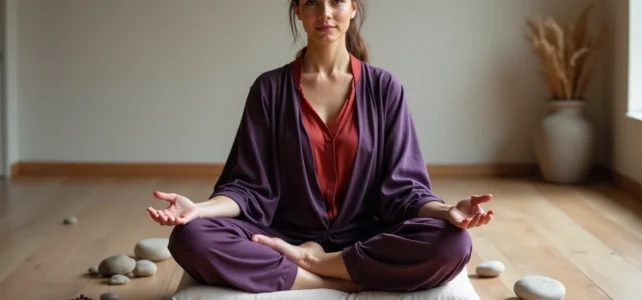
You wear red on a tired day, blue when you need calm. This reflex is not trivial. In yogic tradition, each energy center of the body, called a chakra, is associated with a specific color that translates a vibration, a state of the body and mind. Understanding the colors of the chakras provides a framework for identifying where your tensions, blocked emotions, or untapped resources are located.
Chakra Colors and Endocrine Glands: A Rarely Explained Link
Most guides on chakras simply associate a color with an energy center. They rarely mention that several contemporary lineages of yoga and Ayurveda link each color to a specific endocrine gland.
The blue of the throat chakra (Vishuddha) is associated with the thyroid. The indigo of the third eye (Ajna) corresponds to the pituitary gland. Working on the color of a chakra aims to stimulate the associated gland, according to these approaches. This correspondence is not well documented in traditional articles, but it provides a concrete framework for color visualization or meditation practice.
When an energy healing practitioner suggests visualizing blue light at the throat, the intention is not merely symbolic. It targets a specific physiological axis. Even though scientific validation is lacking, this body-color-gland framework helps structure a meditation or yoga practice around clear goals.
To delve deeper into the colors of the chakras and their meaning on Athomedia, it is useful to keep in mind this physiological dimension often absent from public presentations.
Historical Origin of the Palette of the Seven Chakras
You might imagine that red, orange, yellow, green, blue, indigo, and violet have accompanied the chakras for millennia. The reality is more nuanced.
The current color palette is a stabilized codification from the 20th century, influenced by the New Age movement. Older Indian yogic and tantric texts described the chakras by their mantras, their geometric shapes (yantra), and the number of petals of their lotus. Color was not the primary criterion for differentiation.
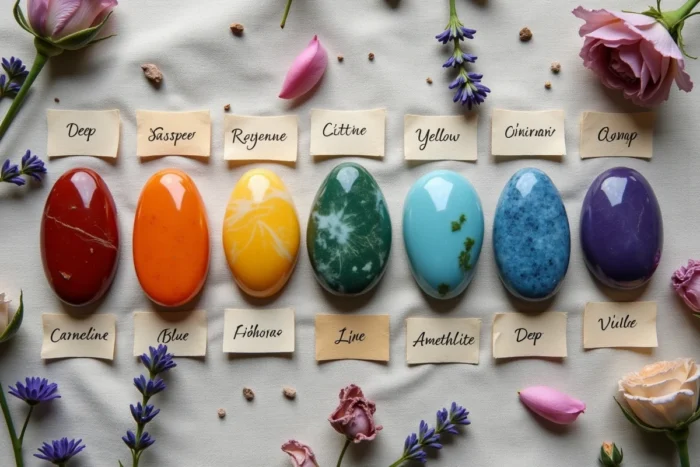
This precision changes the way one can approach practice. A practitioner who rigidly associates “red = root” is working with a modern tool, not with an immutable truth. This is not a flaw. It is an invitation not to freeze one’s practice and to explore other dimensions of the chakra (its mantra, its sound vibration, its bodily location) beyond just color.
Heart Chakra: Why Two Colors, Green and Pink
Have you noticed that the heart chakra (Anahata) is sometimes represented in green, sometimes in pink? This is not a mistake. Green and pink represent two complementary facets of the same energy center.
Green corresponds to healing and renewal. Pink evokes unconditional love and compassion. Several contemporary practitioners work with both shades depending on the intention of the session.
- Green is favored when a person is going through grief, a breakup, or a period of emotional reconstruction, as it carries a regenerative energy.
- Pink is chosen for practices focused on opening up to others, forgiveness, or strengthening emotional bonds.
- Some practitioners superimpose the two colors in visualization, imagining a green heart bordered with pink, to work simultaneously on healing and self-love.
This duality of the heart chakra is a good example of the real flexibility of the chakra system. Colors are not fixed labels but adaptable tools for a specific emotional state.
Using Chakra Colors in Daily Life: Concrete Practices
Color visualization is the most accessible practice. It involves imagining a light of the color of the targeted chakra during meditation. For example, visualizing a yellow sphere at the solar plexus (Manipura) to boost confidence before speaking.
Energy healing practitioners describe a targeted use of these colors for exam preparation. The yellow of Manipura is worked on for mental clarity, the blue of Vishuddha for ease of speaking. Field reports indicate a perceived decrease in stress before competitions, even though this remains scientifically unvalidated.
Beyond meditation, chakra colors can guide simple choices:
- Wearing an orange garment on days when creativity is needed (sacral chakra, Swadhisthana), to anchor an intention related to emotions and movement.
- Choosing stones whose color corresponds to the chakra to be rebalanced, such as a purple stone for the crown chakra (Sahasrara) during a yoga practice focused on the mind.
- Integrating color into the work or rest environment, depending on the desired energy: blue in a communication space, green in a healing place.
These practices require no prior expertise. They rely on a clear intention and attention to the sensations felt during and after the exercise.
What the Color of a Chakra Does Not Indicate
A chakra cannot be reduced to its color. Traditional texts describe each center by a mantra (LAM for the root chakra, OM for the third eye), a geometric shape, and a natural element. Limiting oneself to color is like reading a musical score while only looking at the treble clef.
Physical Sensations and Emotional State
The color guides attention, but it is the physical sensations that inform about the actual state of the chakra. Tension in the throat, chest tightness, or heaviness in the lower abdomen are more reliable indicators than a simple color association. The practice of yoga or meditation benefits from combining color visualization with attentive listening to the body.
The chakra system and its colors remain a tool for energy practice, not a medical diagnosis. Its value lies in the quality of attention it generates in the practitioner, far more than in the accuracy of a specific shade on a color wheel.