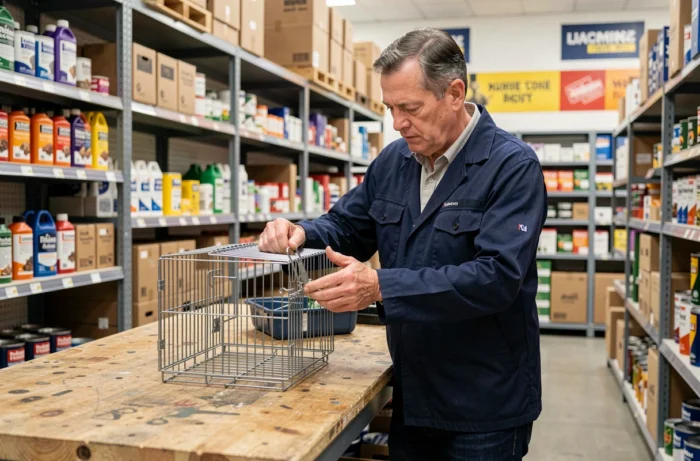
Choosing a weasel trap in a DIY section requires deciding between several parameters that are not always listed on the label: selectivity of the mechanism, dimensions of the cage, local regulatory compliance. Before comparing the models available at Brico Dépôt, it is essential to know what to measure and what distinguishes a truly effective trap from a useless purchase.
Selectivity of the weasel trap: the criterion that product sheets ignore
Most advice pages list the types of traps (cage, glue board, spring device) without addressing the central question: a non-selective trap also captures non-target species. Neighbor’s cat, hedgehog, marten, ground bird, accidental catches are common with a poorly sized or poorly positioned cage.
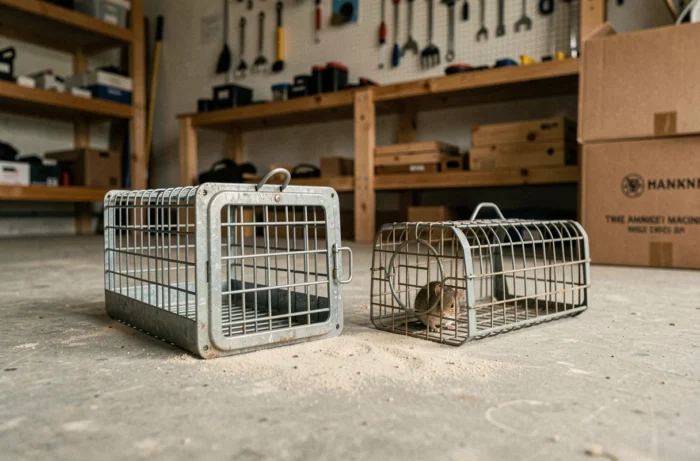
A cage trap intended for weasels must have an opening wide enough for the animal to enter without suspicion, but also a triggering system calibrated for its weight. A too-sensitive trigger closes with the passage of a blackbird. A too-rigid trigger allows the weasel to escape.
Knowing how to choose a weasel trap at Brico Dépôt starts with this selectivity check, well before considering price or brand.
| Criterion | Single door cage trap | Double entrance cage trap | Spring trap (Belisle type) |
|---|---|---|---|
| Selectivity | Medium (risk of capturing cats) | Good (the weasel is more likely to cross a tunnel) | Low (not recommended without approval) |
| Reusable | Yes | Yes | Yes, but wears out quickly |
| Installation | Simple, one door to set | A bit more technical (two traps to adjust) | Requires experience |
| Suitable for attics | Yes | Yes if space allows | No (risk for the user) |
| Legality without trapping approval | Yes (category 1 cage) | Yes (category 1 cage) | No (category 2, approval required) |
The double entrance cage offers a better success rate in open areas. The weasel hesitates more in front of a dead end than in front of a crossing passage. However, in a narrow attic, a single door cage is sufficient because the natural corridor already acts as a tunnel.
Local regulations on weasel trapping: check before buying
The weasel is on the list of species likely to cause damage (ESOD), but its classification varies by department and periods. The ministerial decree of August 3, 2023 sets the national framework, but each prefecture publishes a supplementary decree that specifies whether the weasel can be trapped in the concerned department, and under what conditions.
Buying a cage trap at Brico Dépôt without consulting the local situation exposes one to illegal use. The verification is done in two concrete steps:
- Consult the website of the prefecture of the department to find the current prefectural decree listing the ESOD and the authorized destruction methods.
- Contact the departmental hunters’ federation, which keeps the list of trapable species up to date and can indicate whether a trapping approval is required for the type of trap considered.
- Check the authorized period: some departments restrict trapping to a specific season, while others allow it year-round under certain conditions.
Category 1 cages (traps that capture the animal alive) are the only ones usable without specific approval in most cases. Spring traps or jaw traps fall under category 2 and require trapping approval.
Positioning and bait of the weasel trap: what makes the difference in the field
A well-chosen trap but poorly positioned captures nothing. The weasel follows regular routes, often along walls, beams, or gutters. Placing the cage in the middle of an attic is like setting a fish trap in the middle of a field.
Identifying passages before installation
Paw prints on dust, droppings (elongated, often twisted, with remnants of fruit or feathers), and scratches on wood indicate an active passage. Placing the trap directly on this route significantly increases the chances of capture.
The weasel is wary of new objects. Leaving the cage open and unarmed for a few days, with bait inside, allows the animal to get used to it. This acclimatization phase reduces the risk of the weasel circumventing the device.
Effective baits for the weasel
The weasel is omnivorous with a marked preference for animal proteins and sweet fruits. A whole egg (raw, shell intact) remains the most commonly used bait by experienced trappers. Very ripe fruits (grapes, figs) also work, especially at the end of summer.
Avoid raw meat in summer: it attracts flies, loses its smell quickly, and can trigger non-target captures (stray cats, corvids).

Access prevention: a cage does not replace closing entry points
Capturing a weasel only temporarily solves the problem. If the entry point remains open, another individual will occupy the territory within a few weeks. Mechanical prevention of access is more sustainable than repeated trapping.
Weasels can pass through surprisingly small openings. Any crack or hole in the roof, roof edges, cable passages, or ventilation ducts constitutes a potential entry point. Blocking access with fine mesh wire remains the most effective long-term measure.
The cage trap purchased at Brico Dépôt ideally complements this security: one captures the present individual, then closes the access points before attracting a new one. The opposite (trapping without closing) turns the attic into a permanent rotating trap.
The choice of trap therefore depends as much on the local context and the placement location as on the model itself. The data that truly guides the decision is the ESOD classification in the concerned department: without this prior verification, even the best cage remains a legally unusable object.